Economics of Fine Art: Why Do Paintings Reach Record Prices?
In the exclusive halls of Christie’s and Sotheby’s, the gavel falls on figures that defy conventional logic. When Leonardo da Vinci’s Salvator Mundi sold for $450.3 million, it wasn’t just a transaction for oil on wood; it was a profound demonstration of the economics of fine art. To the uninitiated, these prices seem like a speculative bubble, yet for the global elite, art remains one of the most stable and prestigious forms of asset class diversification. Understanding why a canvas can cost more than a skyscraper requires a deep dive into the intersection of scarcity, history, and social psychology.
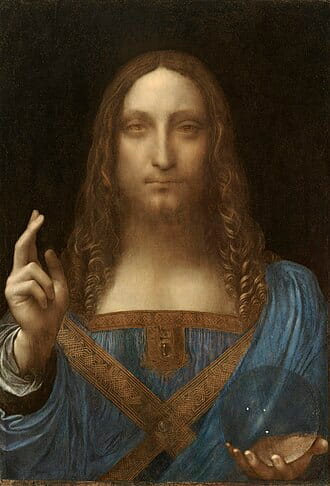
Salvator Mundi, 1499-1510 by Leonardo da Vinci – Acquired by Abu Dhabi’s Department of Culture and Tourism for the Louvre Abu Dhabi -Economics of Fine Art.
The Economics of Fine Art: Why Do Paintings Reach Record Prices?
Scarcity and the “Uniqueness” Premium
The fundamental driver of the economics of fine art is absolute scarcity. Unlike gold, which can be mined, or stocks, which can be issued, the supply of “Masterpieces” by deceased artists is perfectly inelastic. There is only one Mona Lisa; there is only one Starry Night.
In economic terms, fine art is a “Veblen good“—a product for which demand increases as the price rises because it serves as a status symbol.
For high-net-worth individuals, owning a piece that no one else on Earth can possess creates a “uniqueness premium.” This psychological drive, combined with the fact that blue-chip artworks (works by established masters like Picasso or Basquiat) consistently outperform traditional markets during inflation, makes art an irresistible hedge against economic volatility.
Recommended For You – The Life of Pablo Picasso with Questions
The Power of Provenance: The Social History of Value
In the art market, the “history of ownership” or provenance can be as valuable as the painting itself. A work that was once part of a royal collection or owned by a famous visionary like Peggy Guggenheim carries an invisible layer of “cultural capital.”
.
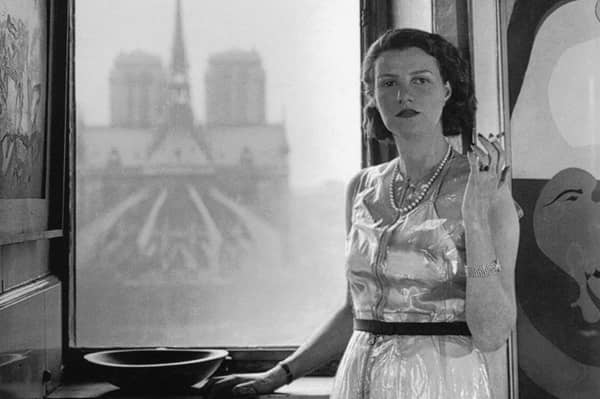
Peggy Guggenheim – Marguerite “Peggy” Guggenheim was an American art collector, bohemian, and socialite.
Provenance acts as a certificate of authenticity and prestige. It transforms a physical object into a historical relic. When we analyze record auction prices, we often find that the “story” behind the painting’s journey through time adds a significant multiplier to its base aesthetic value. This is why a minor sketch by a great master can fetch millions; it is not about the beauty of the line, but the weight of the hand that drew it and the hands that held it thereafter.
The Role of Auction Houses and Global Marketing
The economics of fine art is also a masterpiece of marketing. Major auction houses like Sotheby’s and Christie’s spend millions on global “world tours” for a single painting before it goes under the hammer. They create an aura of inevitability and historical significance around the sale.
By the time the auction begins, the painting has been positioned not just as an object for sale, but as a “once-in-a-lifetime opportunity.” This manufactured urgency is a key factor in why art market trends often see prices skyrocketing far beyond their initial estimates. The auction room itself, with its high-stakes atmosphere and competitive bidding, triggers “winner’s curse” dynamics where the desire to win exceeds the rational valuation of the asset.

The Economics of Fine Art
Recommended For You – How to Invest in Fine Art?
Art as a Financial Instrument: Investment and Diversification
In recent decades, the transition from “art for art’s sake” to art investment value has become institutionalized. Modern collectors treat their portfolios with the same rigor as a hedge fund. Fine art has a low correlation with traditional stocks and bonds, making it a perfect tool for asset class diversification.
-
Capital Preservation: High-end art tends to hold its value during currency devaluations.
-
Tax Efficiency: In many jurisdictions, art can be used in “1031 exchanges” or donated to museums for significant tax write-offs.
-
The Emotional Dividend: Unlike a share of Apple or a gold bar, a painting provides an “emotional dividend”—the prestige and pleasure of living with a masterpiece.
However, the market is not without risk. The speculative bubble of mid-tier contemporary art can burst quickly. This is why savvy investors focus on “Blue-Chip Artists” whose places in the Western Canon are already solidified by museum retrospectives and academic consensus.
The Digital Shift: NFTs and the Future of Curation
The rise of digital assets and NFTs (Non-Fungible Tokens) has introduced a new chapter to the economics of fine art. While traditionalists remain skeptical, the underlying technology—blockchain—addresses the age-old problem of provenance and authenticity in a digital age. This shift is part of a larger trend we will explore in our upcoming analysis on The Evolution of Art Curation.
Conclusion: The Price of the Priceless
The reason paintings reach record prices is that they are the only commodities that sit at the intersection of raw finance and human soul. The economics of fine art tells us that value is not just about labor or materials; it is about belief.
As long as humans strive for immortality through creation and status through ownership, the price of the “priceless” will continue to climb.
For birsanatbirkitap.com, this intersection remains our primary focus—providing the deep analysis that helps our readers navigate the complex world of art, literature, and value.
(References)
- Thompson, D. (2008). The $12 Million Stuffed Shark: The Curious Economics of Contemporary Art.
- Velthuis, O. (2005). Talking Prices: Symbolic Meanings of Prices on the Market for Contemporary Art.
- Artprice.com (2025). Global Art Market Annual Report.
- The Art Newspaper: Auction Records and Market Analysis
- Sotheby’s Institute of Art: The Valuation of Fine Art