Evolution of Art Curation: From Royal Cabinets to Digital Galleries
The evolution of art curation is far more than a simple timeline of museum openings; it is the history of how humanity has attempted to organize, interpret, and display the collective soul of civilization. In the 21st century, the act of curation has moved beyond the physical walls of an institution and into the fluid realm of the digital. Today’s curator is no longer just a “keeper” (the literal Latin root of the word curare—to take care of) but a critical mediator between the artwork, the artist, and a global, hyper-connected audience.
To understand the evolution of art curation, one must analyze the shifting power dynamics behind the display. Who decides what is “art“? Who decides whose story is told? As we transition from the elite, dusty halls of royal palaces to the high-tech, neon-lit virtual galleries of the metaverse, the curator’s role has expanded from physical preservation to intellectual and digital architecture. This transformation is a testament to art’s enduring value as both a cultural pillar and a sophisticated financial asset.
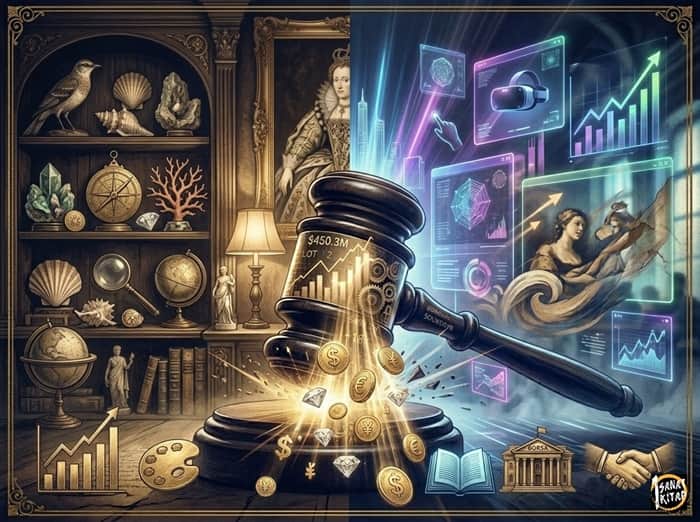
Evolution of Art Curation: From Royal Cabinets to Digital Galleries.
The Evolution of Art Curation: From Royal Cabinets to Digital Galleries
The Genesis of Display: The Kunstkammer and Private Obsession
In the 16th and 17th centuries, the history of museums began with a deeply elitist and chaotic precursor: the Kunstkammer or “Cabinets of Curiosities.” These were private rooms where the European aristocracy displayed vast collections of “wonders.” The philosophy of curation at this stage was not educational but ostentatious. A prince might display a Roman sculpture alongside a “unicorn horn” (actually a narwhal tusk), a mechanical automaton, and a rare botanical specimen.
The curator of a Kunstkammer was often a personal servant or a court scholar. Their task was physical maintenance and inventory. There was no thematic flow; the arrangement was intended to produce wonder and signify the owner’s intellectual dominance over nature and history. This era of curation was defined by the “universal man” ideal—showing that the owner possessed a fragment of every corner of the known world. However, these spaces were closed to the public, keeping the evolution of art curation firmly within the grip of the ruling class.
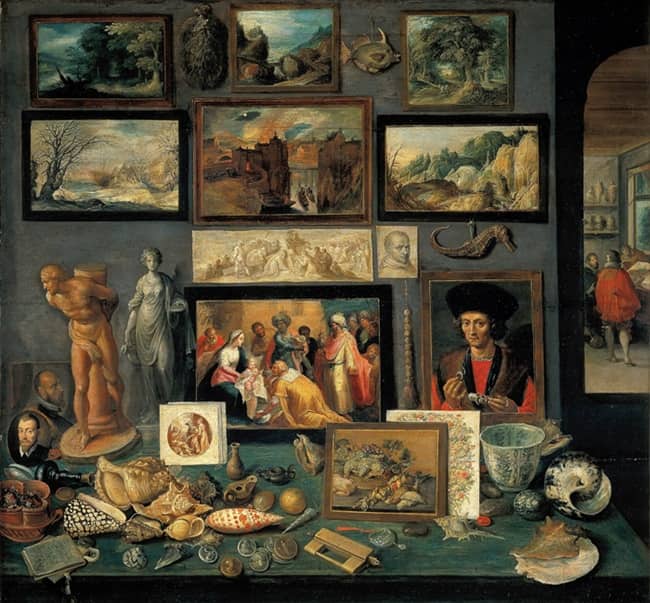
A corner of a cabinet, painted by Frans II Francken in 1636 – Baroque-era – Evolution of Art Curation: From Royal Cabinets to Digital Galleries.
The Enlightenment Shift: Curation as a Tool for Democracy
The 18th-century Enlightenment brought a revolutionary idea: that knowledge, and therefore art, should be a public good. This intellectual shift led to the transformation of royal collections into national institutions. The 1793 opening of the Louvre Museum in Paris, following the French Revolution, is the most pivotal moment in the history of museology. Curation became a political and educational tool.
Curators during this period began to develop the “Linear Narrative.” Works were no longer hung haphazardly for wonder; they were arranged chronologically and by “national schools.” This systematic approach allowed the visitor to walk through time, witnessing the “progress” of art. Curation was now a scholarly pursuit, requiring a deep understanding of art history and classification. The museum became a cathedral of secular knowledge, where the curator acted as the high priest, deciding which works represented the pinnacle of national identity.
Recommended For You – The World’s 10 Most Valuable Paintings in Museums
Institutional Critique and the Birth of the “White Cube”
By the early 20th century, the evolution of art curation faced a new challenge: Modernism. Traditional museums, with their ornate architecture and crowded walls, felt suffocating to the new avant-garde. This led to the rise of the “White Cube” ideology—a gallery space stripped of all architectural ornament, with white walls and controlled lighting.
Brian O’Doherty’s famous critique of the White Cube highlighted that this seemingly “neutral” space was actually a powerful tool of curation. By isolating an object in a white room, the curator grants it an almost religious significance. The modernist curator, exemplified by Alfred Barr at MoMA, became a gatekeeper of “the new.” Their role was to define what was avant-garde and what was obsolete. Curation became a process of exclusion as much as inclusion, shaping the Western Canon for decades to come.
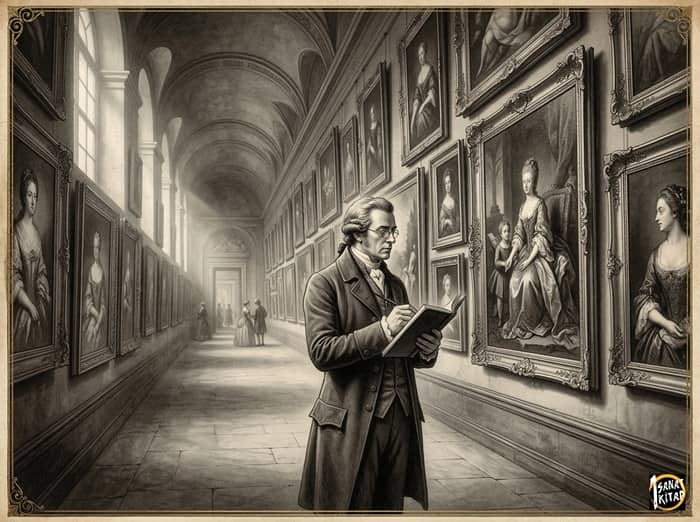
Evolution of Art Curation: From Royal Cabinets to Digital Galleries.
Digital Frontiers: VR, AI, and the Virtual Exhibition Design
We have now entered the most radical phase of the evolution of art curation: the digital era. The rise of digital art galleries has shattered the physical constraints of space and time. A curator in 2026 is no longer limited by the weight of a sculpture or the distance between countries. Virtual exhibition design allows for immersive environments where the viewer can “walk” through a 3D reconstruction of a lost temple or interact with a digital painting that changes based on the viewer’s gaze.
The introduction of Artificial Intelligence (AI) has further complicated the field. AI-generated curation uses algorithms to analyze massive datasets—ranging from social media trends to historical sales data—to predict what an audience wants to see. While some fear this removes the “soul” of curation, others see it as a tool for extreme personalization. A digital gallery can now curate itself in real-time for every individual visitor, offering a unique “emotional dividend” that physical museums simply cannot match.
The Curator as a Global Storyteller and Ethical Mediator
In the 21st century, the role of a curator has evolved into that of an ethical mediator. The modern curator must navigate the difficult waters of “Decolonization” and “Institutional Critique.” This means re-evaluating collections that were acquired through colonial expansion and ensuring that marginalized voices are given a platform.
Curation is now about narrative storytelling. It is not enough to hang a painting on a wall; the curator must explain why it matters in a global context. This is where the academic depth of birsanatbirkitap.com aligns with the future of the industry. We understand that every object carries a story of resistance, power, and beauty. The modern curator uses immersive art experiences to turn a passive viewer into an active participant in history.
The Economics of Curation: Value Creation in the Digital Age
From a financial perspective, the curator remains the ultimate “value creator.” In the economics of fine art, a curator’s endorsement can turn an unknown artist into a global sensation. By including a work in a prestigious biennale or a high-profile museum show, the curator provides the “provenance” that justifies record auction prices.
As we look toward the future, the integration of blockchain and NFTs has created a new demand for “Digital Curation.” Curators are now tasked with verifying the authenticity and scarcity of virtual assets.
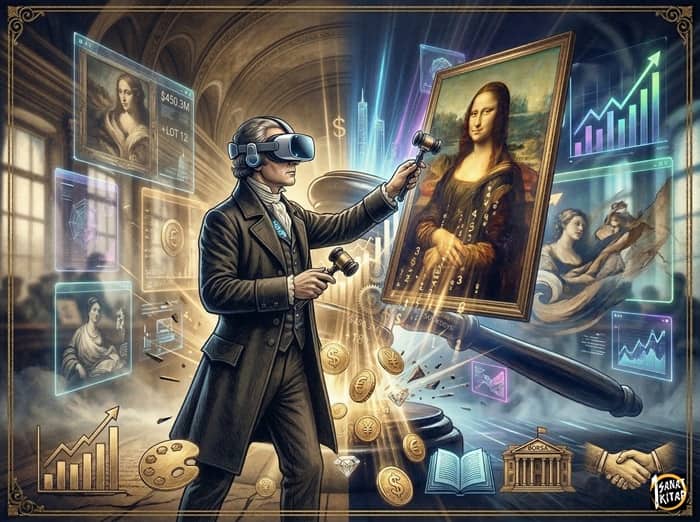
The Economics of Curation: Value Creation in the Digital Age.
Conclusion: The Infinite Gallery
The evolution of art curation is an ongoing saga of democratization. We have moved from the secret cabinets of the elite to a world where anyone with an internet connection can curate their own museum. Yet, the need for expert guidance—the human touch of the scholar—is more vital than ever. In a world drowning in digital imagery, the curator’s ability to select, explain, and inspire is what prevents art from becoming mere noise. For birsanatbirkitap.com, our mission is to be the digital curators for a new generation of art lovers, providing the depth and accuracy that turns information into wisdom.
(References)
- Bennett, T. (1995). The Birth of the Museum: History, Theory, Politics. Routledge.
- O’Doherty, B. (1976). Inside the White Cube: The Ideology of the Gallery Space. Lapis Press.
- Schubert, K. (2000). The Curator’s Egg: The Evolution of the Museum Concept from 1750 to the Present. One-Off Press.
- UNESCO: History of Museology and World Heritage
- MoMA Archives: The Role of the Curator in Modern Art
- Wikipedia: Cabinet of curiosities