


Old Money Aesthetic in Art
In an age of rapid trends and fast fashion, the Old Money aesthetic stands as a fortress of permanence. It is a visual language that whispers rather than screams, rooted in the philosophy of “Quiet Luxury.” To understand why millions are currently obsessed with this aesthetic, we must look beyond the polo shirts and linen trousers. We must travel back to the oil paintings of the 17th-century European aristocracy and the sprawling libraries of the Gilded Age.
The Old Money aesthetic in art is not just about having wealth; it is about the preservation of legacy, the curation of taste, and the subtle use of symbols that signal belonging to an elite, timeless circle.
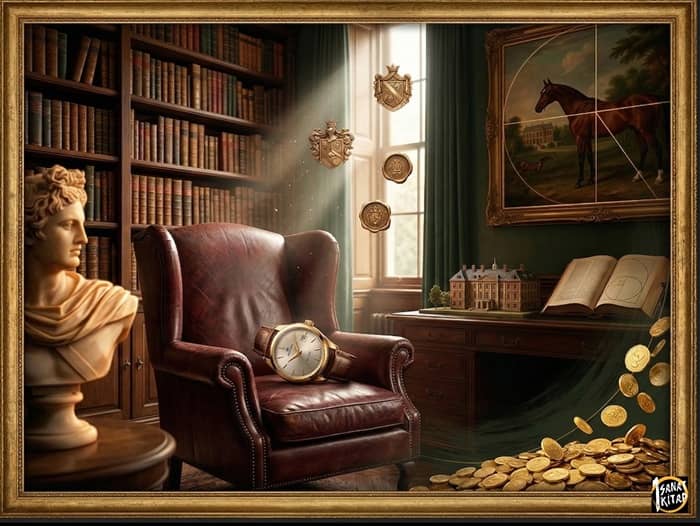
The Old Money Aesthetic.
The Old Money Aesthetic: Decoding the Symbols of Lasting Wealth in Art and History
The Philosophy of Quiet Luxury: Why the Old Money Aesthetic Never Fades
The core of the Old Money aesthetic is a rejection of the nouveau riche obsession with logos and flashy displays. In art history, this was represented by “Sprezzatura“—a certain nonchalance that makes the difficult look easy. When we analyze portraits of the Medici or the Vanderbilt families, we see a deliberate choice of understated elegance.
Unlike modern influencers who flaunt wealth through brand names, the Old Money aesthetic uses material quality as its primary cipher. A portrait might focus on the specific texture of a silk doublet or the patina on a centuries-old oak table. This aesthetic tells the viewer that the wealth has been there for so long that it no longer needs to prove itself.
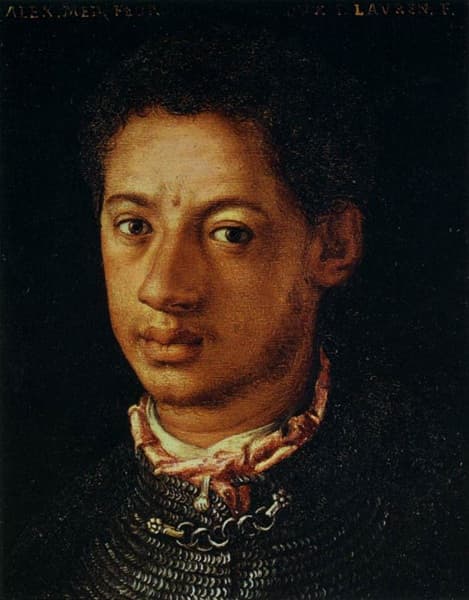
Portrait of Alessandro de’ Medici. (1555-1565). This small portrait of Alessandro was executed by the workshop of Bronzino. In 1532, Alessandro became the first Medici duke, the result of a pact between his father, now Pope Clement VII, and the Holy Roman Emperor Charles V. The tyrannical and illegitimate duke, whose African features suggest his mother’s origin, was murdered by his pretender -cousin, the wicked Lorenzaccio, when he was twenty-six years old -The Old Money Aesthetic: Decoding the Symbols of Lasting Wealth in Art and History.
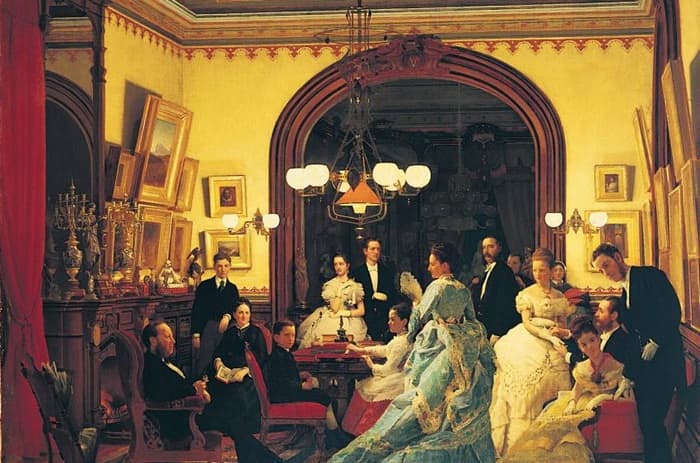
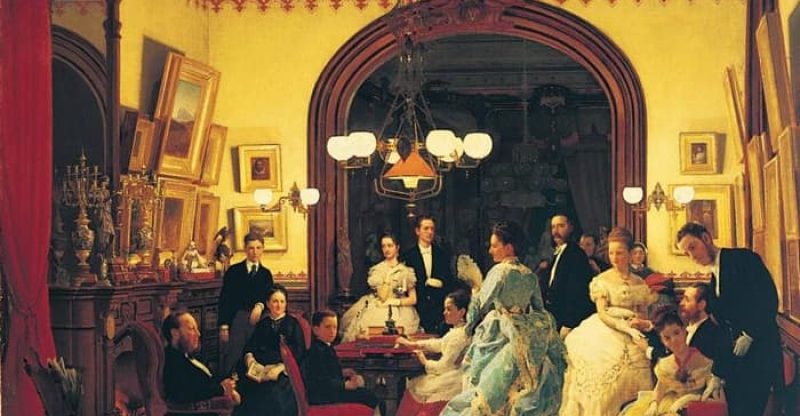
Going to the Opera, an 1874 portrait of W.H. Vanderbilt’s family in their 459 5th Avenue mansion by Seymour Joseph Guy – The Old Money Aesthetic.
Recommended For You – Evolution of Art Curation: From Royal Cabinets to Digital Galleries
Equestrian Grace and Sporting Life: The Visual Symbols of Ancestry
One cannot discuss the Old Money aesthetic in art without mentioning the influence of the “Sporting Life.” Equestrian art—paintings of horses, hunting hounds, and rolling country estates—is the visual backbone of this movement. Artists like George Stubbs or Alfred Munnings didn’t just paint animals; they painted the Leisure Class at rest.
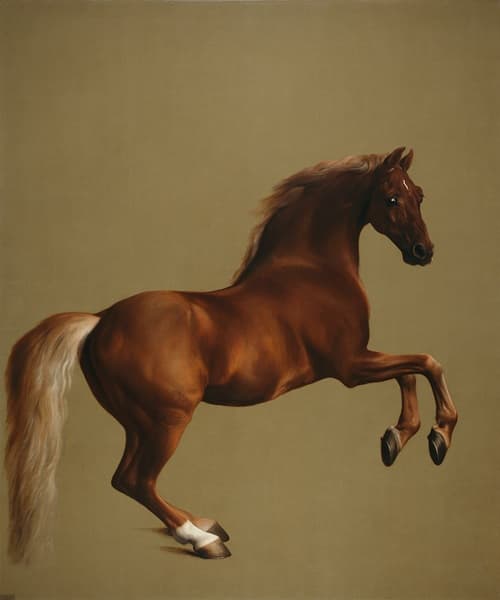
Whistlejacket, 1762 by George Stubbs.
In the Old Money aesthetic, owning land and breeding horses were the ultimate signs of generational stability. Today’s obsession with the “Ralph Lauren look” is a direct digital descendant of these 18th-century paintings. By deconstructing these symbols—the riding boots, the family crests, the sprawling landscapes—we provide the old money enthusiast with the historical depth they crave, moving beyond the surface-level TikTok trends.
The Academic Heritage: Dark Academia and the Old Money Aesthetic
There is a significant overlap between the “Dark Academia” trend and the Old Money aesthetic. Both value the pursuit of knowledge, classical literature, and the “Oxfordian” lifestyle. In art, this is visualized through the “Grand Tour”—the traditional trip across Europe taken by young aristocrats to collect antiquities and master the arts.
-
The Private Library: In the Old Money aesthetic, a room full of books is a greater status symbol than a room full of gold. It represents “Symbolic Capital.”
-
The Grand Tour Portraits: Portraits featuring Roman ruins or Greek statues in the background were the “travel vlogs” of the 17th century, signaling a global and educated perspective.
-
Statues and Busts: The presence of classical sculpture in a painting signifies a connection to the Greco-Roman roots of Western civilization, a key element of the Old Money aesthetic.
The Modern Evolution: From Oil Paintings to Stealth Wealth
As we transition into the 21st century, the Old Money aesthetic has evolved into “Stealth Wealth.” In a world of digital surveillance, the truly elite have become even more discreet. However, the symbols remain the same: high-quality fabrics, a focus on heritage, and an appreciation for the “Hand-Made.”
The Psychology of Belonging: Why We Romanticize the Past
Why are Gen Z and Millennials so drawn to the Old Money aesthetic? Psychologically, in an era of economic uncertainty, we romanticize the perceived stability of the past. The aesthetic offers a sense of “order” and “tradition” that is missing from the chaotic modern world. By understanding the Old Money aesthetic in art, we aren’t just looking at rich people; we are looking at the human desire for roots and a legacy that outlasts a single lifetime.
The Immortal Legacy of the Old Money Aesthetic
The Old Money aesthetic is far more than a fashion trend; it is a cultural anchor. Whether through the lens of a George Stubbs painting or a modern minimalist interior, its core principles of quality, legacy, and discretion remain unchanged. As we have explored, the Old Money aesthetic in art provides a sanctuary of taste in a world of noise. At birsanatbirkitap.com, we believe that understanding these timeless symbols is the key to appreciating not just wealth, but the very art of living well.
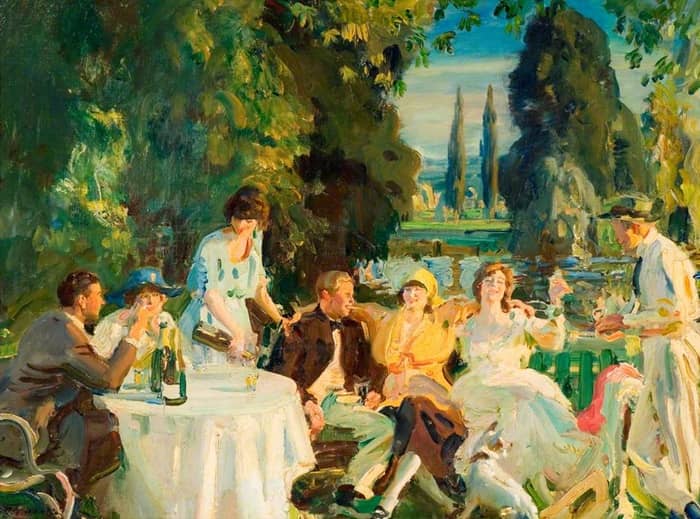
Tagg’s Island, 1920 by Alfred James Munnings (1878–1959)
References
- Veblen, Thorstein (1899). The Theory of the Leisure Class (Foundational text on conspicuous consumption).
- Stubbs, George (1766). The Anatomy of the Horse. (Key work on equestrian art).
- Bourdieu, Pierre (1984). Distinction: A Social Critique of the Judgement of Taste. (Analyzing symbolic capital).
- Goffman, Erving (1959). The Presentation of Self in Everyday Life. (Symbols of status and belonging).
- Web Gallery of Art
- Wikipedia: Vanderbilt family
- Wikipedia: Whistlejacket
- Art UK


