Aesthetics of Melancholy: Why We Find Beauty in Sad Art & Books
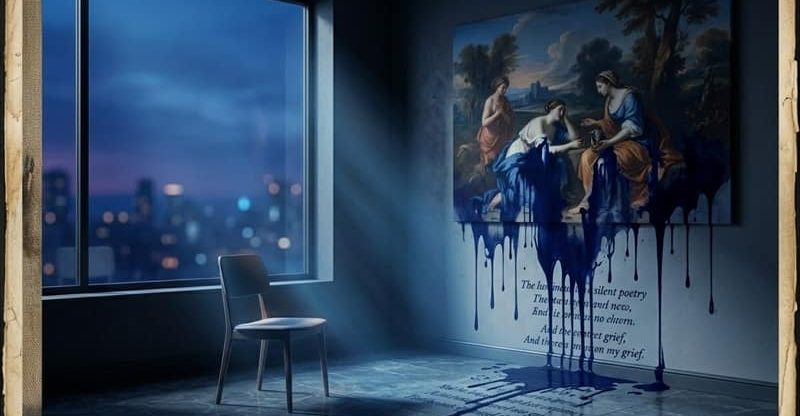
The aesthetics of melancholy serves as a profound paradox in human creativity: why do we derive intense pleasure from the very emotions we strive to avoid in our daily lives? In the corridors of the world’s most prestigious galleries and within the brittle pages of immortal novels, the aesthetics of melancholy acts as an invisible magnetic force. It pulls the spectator toward the dimly lit corners of the human experience, suggesting that beauty is not always synonymous with radiance. Whether it is the silent, neon-soaked diners of Edward Hopper or the hauntingly beautiful elegies of John Keats, sadness is not merely an absence of joy but a rich, textured state of being. To truly master the aesthetics of melancholy, one must look beyond the surface of sorrow and explore how artists throughout history have transformed individual grief into a universal language of aesthetic sublimity.

Why We Find Beauty in Sad Art & Books?
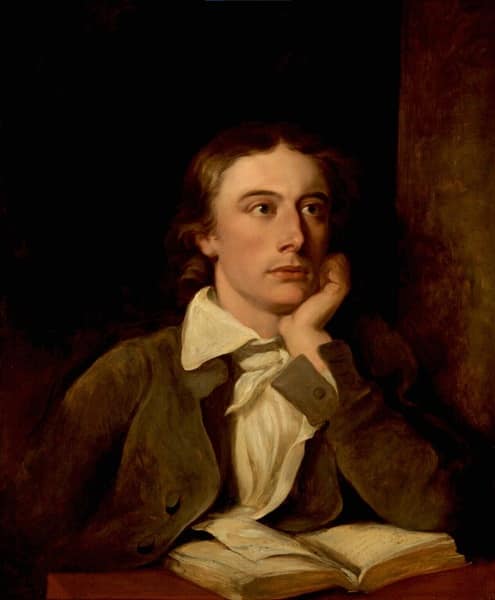
John Keats (31 October 1795 – 23 February 1821) was an English poet of the second generation of Romantic poets, along with Lord Byron and Percy Bysshe Shelley. – Posthumous portrait by William Hilton, c. 1822.
The Aesthetics of Melancholy: Why We Are Drawn to Sadness in Art and Literature
The Philosophical Roots of Sad Beauty: From Aristotle to the Sublime
The intellectual foundation of the aesthetics of melancholy is deeply rooted in the ancient Greek concept of catharsis. Aristotle, in his Poetics, argued that by witnessing tragic art, the audience undergoes a “purification” of the soul. In the realm of the aesthetics of melancholy, this release is not a rejection of sadness but an embrace of it. By seeing our internal shadows reflected on a canvas, our personal grief finds a dignified home in the public sphere.
As the 18th century began, Edmund Burke and Immanuel Kant further refined the aesthetics of melancholy through the theory of the “Sublime.” Unlike traditional beauty, which is small and contained, the Sublime represents something vast, overwhelming, and slightly terrifying. A stormy sea by J.M.W. Turner or a desolate moor in a Brontë novel evokes the aesthetics of melancholy by reminding us of our own finitude. This realization creates a “safe threat”—a psychological state where we feel the weight of existence without being crushed by it.
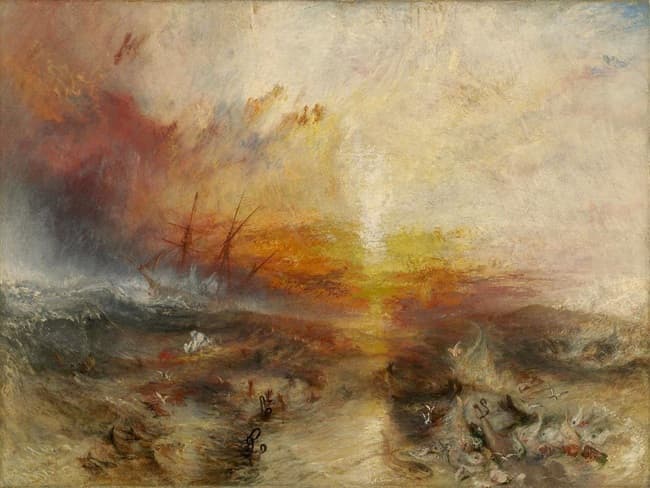
The Slave Ship, 1840 by Joseph Mallord William Turner.
Recommended For You – The Slave Ship Analysis: J.M.W. Turner’s Haunting Masterpiece
Edward Hopper and the Architecture of Modern Loneliness: Visualizing Sadness
Perhaps no artist in the 20th century captured the aesthetics of melancholy as poignantly as Edward Hopper. While his contemporaries were exploring abstract expressionism, Hopper remained focused on the “stilled moment.” His most iconic work, Nighthawks, serves as the ultimate visual manifesto for urban isolation.

Edward Hopper (July 22, 1882 – May 15, 1967) was an American realist painter and printmaker. He is one of America’s most renowned artists and is known for his skill in depicting modern American life and landscapes.
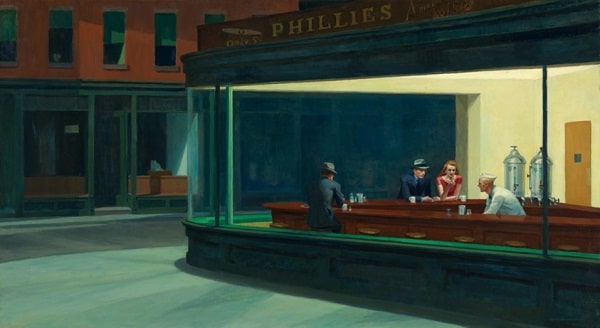
Nighthawks, 1942 by Edward Hopper – The Most Famous Paintings in American Art History.
Recommended For You – The Most Famous Paintings in American Art History
In Hopper’s world, the aesthetics of melancholy is constructed through light and space rather than explicit tragedy. The subjects in Nighthawks are not crying; they are simply there, separated by glass and the silent hum of a late-night diner. This “clean” version of sadness resonates deeply with the modern digital audience. On platforms like Pinterest, the aesthetics of melancholy in Hopper’s work validates the quiet, solitary moments of the 21st century, transforming the stigma of being “alone” into a prestigious aesthetic experience.
Dark Romanticism: The Literary Heart of the Aesthetics of Melancholy
In literature, the aesthetics of melancholy reached its zenith during the Romantic era. Poets like John Keats, Lord Byron, and Percy Bysshe Shelley did not merely observe sadness; they worshipped it as a divine muse. Keats, in his “Ode on Melancholy,” explicitly instructs the reader to “glut thy sorrow on a morning rose.”
He argues that the aesthetics of melancholy is the inseparable shadow of true joy. To Keats, one cannot fully appreciate the burst of a grape against the palate without acknowledging the transience of that sweetness.
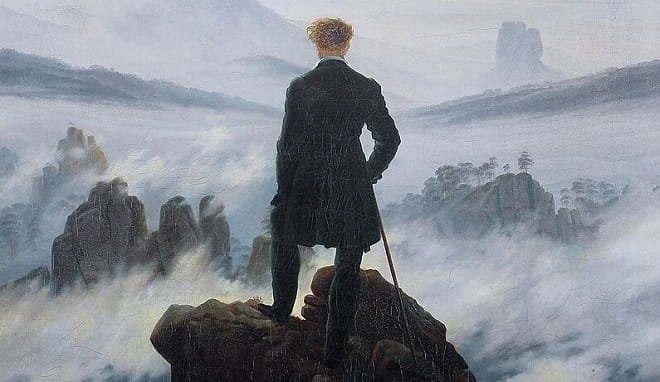
Wanderer above the Sea of Fog, 1818 by Caspar David Friedrich.
The aesthetics of melancholy in Romantic literature often utilizes the “Pathetic Fallacy”—the attribution of human emotions to nature. A desolate moor in Wuthering Heights or a weeping willow in an elegy serves to mirror the internal landscape of the soul. This immersion ensures that the reader never feels truly alone in their grief; they are accompanied by the entire environment, fostering a sense of profound companionship that is central to the aesthetics of melancholy.
Psychological Appeal: Why We Seek the Aesthetics of Melancholy in Art
Why do we actively seek out the aesthetics of melancholy? Neurobiology provides a fascinating answer. When we engage with sad art or music, our brains release prolactin, a hormone typically associated with comfort, nursing, and bonding. Because the “threat” in the art is not real, we receive the soothing chemical benefits of the hormone without the actual trauma.
Furthermore, the aesthetics of melancholy fosters radical empathy. In a world that often demands performative happiness, melancholic art offers a sanctuary of honesty.
In the high-stakes economics of fine art, works that evoke the aesthetics of melancholy often maintain higher long-term cultural value. While “happy” art can feel tied to a specific era’s fashion, the aesthetics of melancholy speak to a universal human condition that remains unchanged by time or technology.
The Digital Renaissance: Modern Interpretations of the Aesthetics of Melancholy
In the 21st century, the aesthetics of melancholy have evolved into digital subcultures. Trends like “Dark Academia” and “Sadcore” utilize the visual language of the past—rainy windows, vintage typewriters, and old libraries—to romanticize the intellectual struggle. For birsanatbirkitap.com, this represents a bridge between classical history and modern identity. By analyzing the aesthetics of melancholy, we are not just looking at the past; we are interpreting the current zeitgeist of a generation finding solace in the beauty of sorrow.
The Resilience of the Melancholic Soul
The aesthetics of melancholy is ultimately not a celebration of despair, but a celebration of the depth of human feeling. To find beauty in sadness is a sign of immense emotional and intellectual resilience.
As we have explored through the lenses of Hopper, Friedrich, and the Romantic poets, it provides a sanctuary for the weary soul. It teaches us that our shadows are just as vital as our light. At birsanatbirkitap.com, we invite you to embrace these shadows, for it is only in the darkness that the true light of genius becomes visible.
References and Scholarly Sources
- Burton, R. (1621). The Anatomy of Melancholy. (The foundational text on the subject).
- Hopper, E. (1942). Nighthawks [Oil on canvas]. Art Institute of Chicago.
- Kant, I. (1790). Critique of Judgment. (Analysis of the Sublime).
- Keats, J. (1819). Ode on Melancholy.
- Brady, E., & Haapala, A. (2003). Melancholy as an Aesthetic Emotion. Contemporary Aesthetics.
- Wikipedia: Edward Hopper
- Wikipedia: John Keats
- Wikipedia: The Slave Ship