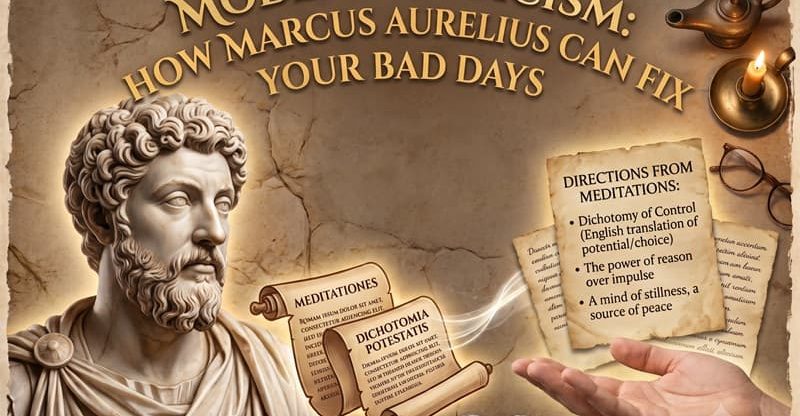
Modern Stoicism: How Marcus Aurelius Can Fix Your Bad Days
Modern stoicism is having a real moment — not as a dusty academic subject, but as a practical toolkit people reach for on their worst days. And nobody built that toolkit better than a Roman emperor who never meant to publish a single word of it. Marcus Aurelius wrote his private notebook, now known as Meditations, purely for himself — a running argument he had with his own mind while running an empire, fighting wars, and burying children. That accident of history gave us one of the most honest self-help books ever written, eighteen centuries before the genre existed.
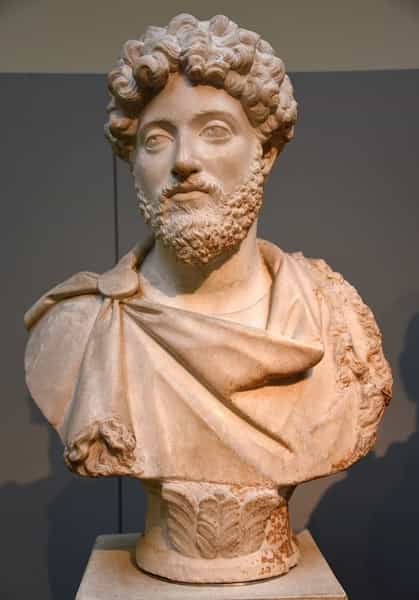
Marble bust of the Roman Emperor Marcus Aurelius – One of a series of imperial busts from the residence of Jason Magnus, a prominent citizen of Cyrene. Roman, about 160-170 CE. From Cyrene, North Africa. Found by Lieutenant R. M. Smith, RE, and Commander E. A. Porcher, RN. (The British Museum, London).
What Is Modern Stoicism, Exactly?
Ancient Stoicism began around 300 BCE in Athens, when the philosopher Zeno of Citium started teaching under a painted colonnade called the Stoa Poikile — hence the name. The core idea was deceptively simple: some things are within our control (our judgments, choices, reactions), and some things are not (other people, the economy, the weather, death itself). Peace of mind comes from investing all our energy in the first category and releasing our grip on the second.
Modern stoicism is the 21st-century revival of that same idea, stripped of its ancient cosmology and repackaged for people dealing with inbox anxiety, breakups, layoffs, and doom-scrolling rather than shipwrecks and plagues. It’s why the philosophy has quietly become popular again among founders, athletes, therapists, and — increasingly — anyone who’s tired of self-help advice that sounds nice but doesn’t survive contact with a genuinely bad Tuesday.
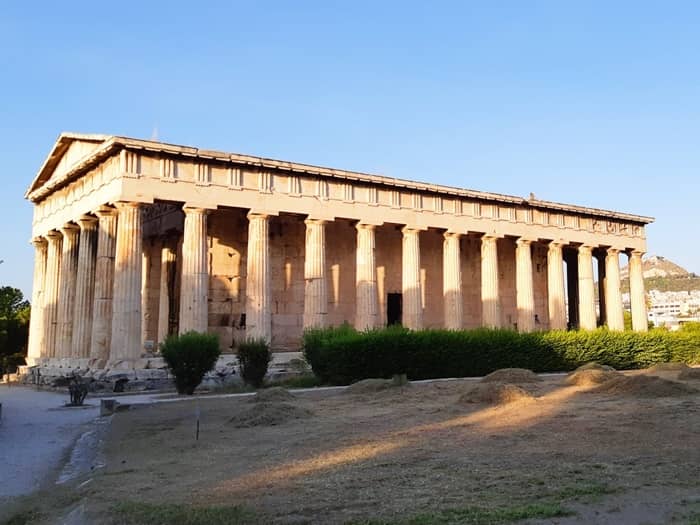
The Ancient Agora of Athens and Hephaestus Temple – The Ancient Agora of Athens, one of the most important sights of the Greek capital, is located northwest of the Acropolis, between the neighborhoods of Thissio and Monastiraki. A large area with ancient ruins and much greenery, the Ancient Agora was the center of Athens in antiquity, the place where political gatherings and juries would take place.
Who Was Marcus Aurelius, and Why Does He Matter More Than Seneca or Epictetus?
Of the three most-read Stoic writers — Seneca the statesman, Epictetus the former slave, and Marcus Aurelius the emperor — Marcus is the one who never intended to teach anyone. Seneca wrote persuasive essays. Epictetus lectured students. Marcus Aurelius simply argued with himself in the dark, trying to talk himself back into virtue after a hard day of politics, war, and grief. That’s precisely why his words feel less like a lecture and more like eavesdropping on someone’s 2 a.m. thoughts.
He ruled Rome from 161 to 180 CE, much of it spent on military campaigns along the Danube frontier, while a plague swept through the empire and he lost several of his own children. He wasn’t writing from comfort. He was writing from inside the exact kind of chaos that modern stoicism is meant to help with.
Five Marcus Aurelius Principles Behind Modern Stoicism
1. The Dichotomy of Control: Sort every stressful situation into two piles: things you can influence and things you can’t. Most anxiety lives in the second pile. Marcus returned to this idea constantly, reminding himself that other people’s opinions, the outcome of a battle, or another person’s rudeness were never truly his to control — only his own response was.
2. Memento Mori (Remember You Will Die) Not morbid — clarifying. Marcus kept mortality close as a filter for what actually deserves his attention. Modern stoicism uses the same trick: if a worry wouldn’t matter on your deathbed, it probably shouldn’t run your Tuesday afternoon.
3. Amor Fati (Love Your Fate) Rather than merely tolerating what happens, embrace it as material to work with. A canceled flight, a failed project, a difficult diagnosis — each becomes raw material for character rather than a reason for despair.
4. Negative Visualization Briefly imagining the loss of something you value — your job, your health, a relationship — sounds counterintuitive, but it’s one of the oldest resilience techniques in existence, resetting the gratitude you’ve stopped noticing.
5. Evening Self-Examination Marcus, like Seneca, reviewed his day before sleep: what did I do well, where did I fail, what will I change tomorrow. This is arguably the single most practical, screen-free habit modern stoicism offers anyone overwhelmed by self-improvement content.

Five Marcus Aurelius Principles Behind Modern Stoicism.
How Modern Stoicism Actually Helps on a Bad Day
Here’s where theory becomes usable. Say you’ve just been passed over for a promotion, or a relationship ended badly, or your inbox is on fire. A stoic approach doesn’t ask you to fake positivity. It asks three quick questions:
- Is this within my control right now? If not, what part of my reaction to it is?
- What would this look like from a distance — in a year, or from a stranger’s perspective?
- What is the one useful action available to me in the next hour?
This isn’t about suppressing emotion. Even Marcus Aurelius admitted to frustration, grief, and impatience in his own notebook — the goal was never to feel nothing, but to avoid letting an unexamined reaction make a bad day worse. That distinction is exactly why modern stoicism has aged so much better than most self-help fads: it was never selling happiness. It was selling steadiness.
Modern Stoicism, Art, and the Philosophy of Resilience
Philosophy and art have always shared the same raw material — how humans respond to suffering. Pablo Picasso’s own turn toward melancholy blues after the death of a close friend, explored in depth in our piece on Picasso’s shift from grief-soaked blue tones to a warmer, more hopeful period, mirrors the stoic idea that even our darkest material can eventually be reworked into something meaningful. Renaissance painters, too, embedded philosophical ideas directly into their canvases — as we explored in our look at the hidden philosophical and moral symbolism inside Botticelli’s and da Vinci’s masterpieces— proof that the questions Stoicism asks about how to live well have always run parallel to the history of art itself.
Common Misconceptions About Stoicism
The biggest myth is that stoicism means emotional suppression — the “stiff upper lip” caricature. In reality, the ancient Stoics wrote extensively about grief, anger, and fear; they simply argued that unexamined emotional reactions cause more damage than the original event. Another myth is that stoicism is passive or fatalistic. It’s the opposite: it’s a philosophy built almost entirely around action within your control, not resignation.
Where to Start Reading
If this is your first real contact with Stoic philosophy beyond a quote graphic on social media, Marcus Aurelius’s Meditations is still the most direct entry point — short, fragmentary, and startlingly modern in tone. From there, Seneca’s letters and Epictetus’s Enchiridion round out the picture nicely.
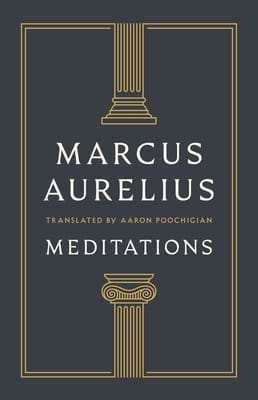
Marcus Aurelius – Meditations.
If you’re the kind of reader who likes to track what you’ve read, note progress, and revisit favorite passages later — that’s exactly the gap a reading-companion app like Bookmory is built to fill. It’s a natural fit for anyone building a personal Stoic reading list one book at a time.
The Bottom Line
Modern stoicism isn’t a productivity hack or an aesthetic trend, even if it currently benefits from both. It’s a two-thousand-year-old argument for steadiness that happens to have been battle-tested by an emperor burying his own children while an empire burned around him. If it worked for him on his worst days, there’s a reasonable case it can help with yours.
References
- Sellars, John. “Stoicism.” Stanford Encyclopedia of Philosophy, plato.stanford.edu/entries/stoicism/
- “Stoicism: Definition, History, & Influence.” Encyclopaedia Britannica,
- “What Is Stoicism? A Definition & 9 Stoic Exercises.” Daily Stoic, dailystoic.com
- “Stoicism Reading List.” Philosophy Break.
- https://www.worldhistory.org/image/5998/bust-of-marcus-aurelius/
- https://realgreekexperiences.com/ancient-agora-athens