Camus Absurdism Explained: Sisyphus and the Meaning of Life
Camus absurdism starts from an uncomfortable observation: you want your life to mean something, and the universe has never once confirmed it does. Albert Camus called that gap between our hunger for meaning and the world’s total silence on the matter “the absurd” — not a mood, not a personality trait, but a genuine philosophical problem he spent his career trying to live with honestly, rather than paper over with false comfort.

Camus Absurdism Explained: Sisyphus and the Meaning of Life.
What Is Absurdism, Exactly?
Camus laid out the whole argument in his 1942 essay The Myth of Sisyphus. The absurd, in his precise sense, isn’t the universe itself (which is simply indifferent) and isn’t human longing itself (which is simply natural) — it’s the collision between the two. We ask “why” about everything; the world answers nothing. That friction, held without flinching, is what Camus meant by the absurd.
This is a subtler claim than it first sounds. Camus wasn’t arguing that life is pointless in some edgy, teenage-bedroom-poster sense. He was arguing that the demand for a cosmic point is built into being human, and that demand will never be met — so the real question isn’t “what’s the meaning of life,” it’s “how do you keep living once you’ve stopped expecting an answer.”
The Myth of Sisyphus: Camus’s Central Metaphor
Camus borrowed the Greek myth of Sisyphus, a king condemned by the gods to push a boulder up a mountain forever, watching it roll back down every time he nears the top, for eternity. It’s a punishment specifically designed around futility — not pain, not danger, just endless, pointless repetition. Camus recognized it instantly as a portrait of ordinary modern life: the commute, the inbox, the routine that resets every morning regardless of what you accomplished yesterday.
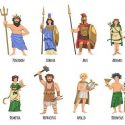
Recommended For You – Ancient Greek Gods
His conclusion is the famous, and genuinely surprising, twist: rather than treating Sisyphus as a tragedy, Camus insists we should picture him at the one moment he’s walking back down the mountain, boulder-free, fully conscious of the pointlessness waiting for him at the bottom — and imagine him at peace with it. In Camus’s own six-word closing line, we must imagine Sisyphus happy. Not because the task became meaningful. Because Sisyphus stopped needing it to be.
.

The Myth of Sisyphus: Camus’s Central Metaphor. – Camus Absurdism Explained: Sisyphus and the Meaning of Life.
Three Ways to Respond to the Absurd
Camus was unusually systematic about laying out the options once you actually confront the absurd honestly, and he rejected two of the three:
1. Physical suicide
Camus opens The Myth of Sisyphus by calling this the only truly serious philosophical question — if life has no inherent meaning, why not end it? He answers no, and spends the rest of the essay explaining why escaping the problem isn’t the same as solving it.
2. Philosophical suicide.
This is Camus’s term for the leap into religion, ideology, or any system that manufactures a meaning the universe never actually provided — comforting, but a refusal to look at the absurd directly. He respected thinkers like Kierkegaard while firmly rejecting this exit.
3. Revolt.
Camus’s actual answer: hold the tension permanently, refuse both suicide and false comfort, and live at full intensity precisely because nothing is guaranteed to matter. Revolt isn’t rebellion against a person or a government — it’s a daily refusal to let meaninglessness win by default.
Absurdism vs. Existentialism vs. Nihilism: What’s the Difference?
These three get flattened together constantly, and the distinctions actually matter. Nihilism concludes that nothing matters and often stops there. Existentialism (Sartre’s version especially) agrees the universe hands us no built-in meaning, but insists we can create our own through radical free choice. Camus’s absurdism refuses both exits: he won’t let you collapse into nihilistic despair, and he won’t let you manufacture meaning and pretend the manufacturing solved the original problem. Our forthcoming piece explaining nihilism and Nietzsche in full will unpack that first comparison in more depth once it’s published.
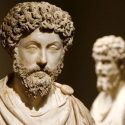
It’s worth setting this next to a much older answer to the same anxiety. Where Marcus Aurelius and the Stoics found peace by aligning themselves with a rational, ordered universe, Camus starts from the opposite premise — the universe isn’t ordered at all, it’s simply silent — and still arrives somewhere strangely close: neither philosophy asks you to feel nothing, and both land on a disciplined, chosen kind of steadiness rather than either despair or denial.
Why Dark Academia Keeps Coming Back to Camus
It’s not an accident that Camus shows up on every dark academia reading list next to Dostoevsky and the Greek tragedians. The aesthetic’s entire mood — candlelit, serious, a little melancholy, obsessed with big unanswerable questions — is essentially Camus’s problem staged as interior decorating. Our guide to the art, books, and philosophy behind dark academia flagged this piece as required reading for exactly that reason, and it holds up: you can’t really understand what the aesthetic is reaching for without sitting with the absurd directly, not just its mood board.
How Absurdism Actually Helps You Get Through a Meaningless Tuesday
This isn’t only a classroom exercise. Camus’s framework gives you a genuinely usable move on the days when nothing feels like it adds up to anything:
- Notice the absurd instead of fighting it. The inbox will never stay empty; the to-do list resets every day. That’s not a personal failure; it’s the structure of the thing.
- Don’t reach for a manufactured meaning just to make the discomfort stop. Sitting with “this doesn’t have to mean something” is uncomfortable but honest.
- Choose intensity anyway. Camus’s revolt isn’t passive endurance — it’s showing up fully for the boulder, the walk down the mountain included, simply because you’re the one doing it.
Where to Start Reading
The Myth of Sisyphus is short, dense, and worth reading slowly rather than summarized. From there, Camus’s novels — The Stranger and The Plague — dramatize the same ideas through actual characters instead of argument, which makes the philosophy land harder.
.
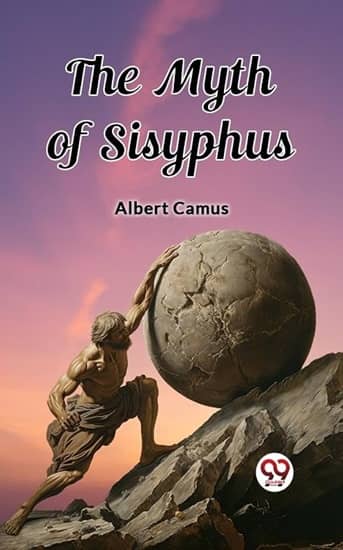
The Myth of Sisyphus by Albert Camus.
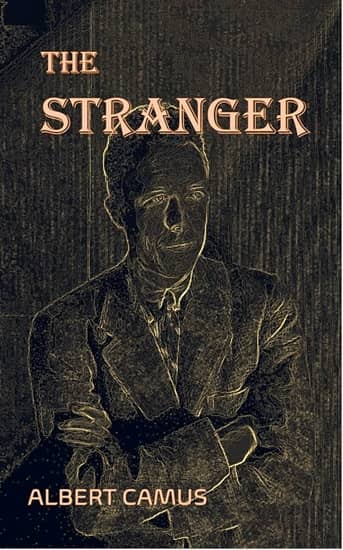
The Stranger by Albert Camus. – Camus Absurdism Explained: Sisyphus and the Meaning of Life.
Frequently Asked Questions
What is the difference between absurdism and existentialism? Both agree the universe provides no built-in meaning. Existentialism (especially Sartre’s) responds by insisting individuals must create their own meaning through free choice. Camus’s absurdism refuses that move too, arguing that manufacturing meaning is just a subtler way of avoiding the absurd rather than confronting it directly.
Did Camus believe life has no meaning? Not quite. Camus argued the universe offers no confirmed, built-in meaning, and that pretending otherwise is a form of self-deception. His actual position was that life is worth living precisely without that guarantee, through conscious revolt rather than despair or denial.
What does “we must imagine Sisyphus happy” mean? It’s Camus’s argument that meaning isn’t required for a fulfilling life — awareness and acceptance are enough. Sisyphus becomes happy not because his task gains purpose, but because he stops needing it to have one, taking ownership of his fate instead of resenting it.
Is absurdism the same as nihilism? No. Nihilism concludes nothing matters and often stops there. Camus explicitly rejected that endpoint, arguing that living fully and rebelling against meaninglessness is a coherent, even joyful, response — the opposite of nihilism’s resignation.
The Bottom Line
Camus absurdism isn’t a philosophy of despair, whatever its gloomy reputation suggests. It’s an argument for taking life seriously precisely because nothing guarantees it matters — a harder, more honest position than either giving up or pretending you’ve solved the riddle. Sisyphus never gets to stop pushing the boulder. Camus’s whole point is that he doesn’t need to, in order to be free.
References
- Aronson, Ronald. “Albert Camus.” Stanford Encyclopedia of Philosophy,
- “Absurdism.” Internet Encyclopedia of Philosophy, iep.utm.edu
- “Albert Camus: French Author and Philosopher.” Encyclopaedia Britannica, britannica.com/biography/Albert-Camus
- https://www.amazon.com.au/Myth-Sisyphus-Albert-Camus-ebook/dp/B0D29QC9C6
- https://www.amazon.com/Stranger-Albert-Camus-ebook/dp/B083ZQZ68C