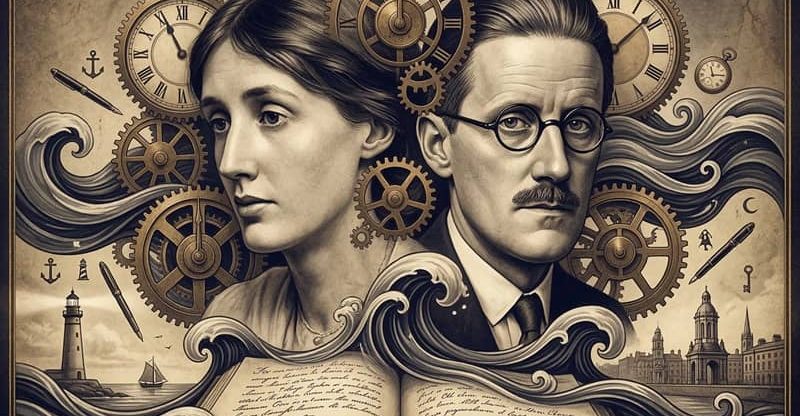
Modernist Literature Symbols: Decoding Virginia Woolf and James Joyce
Modernist literature symbols are not merely decorative elements; they are the structural bones of a genre that sought to map the chaotic interior of the human mind. In the early 20th century, as the world fractured under the weight of global war and rapid industrialization, writers like Virginia Woolf and James Joyce abandoned traditional linear plots. Instead, they turned to a fragmented, symbolic language to capture the “flicker of the spirit.” To understand Modernism, one must learn to decode the recurring motifs that bridge the gap between external reality and internal monologue.
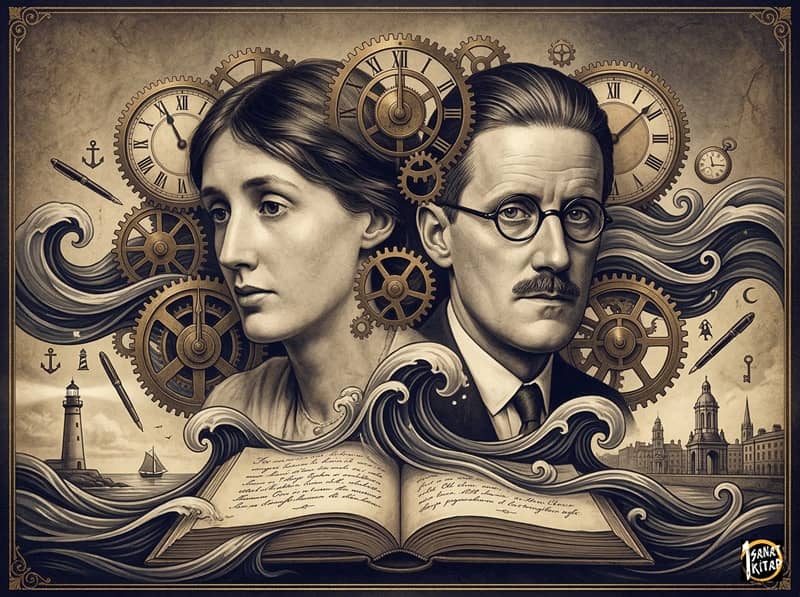
Modernist literature symbols: an artistic collage with Virginia Woolf and James Joyce, combining clock gears, sea waves, and internal monologues.
The Fluidity of Time: Woolf’s Lighthouse and Joyce’s Clocks
One of the most prominent symbols of modernist literature is time. For the Modernists, time was no longer a steady tick-tock of a clock; it was fluid, subjective, and often haunting.
In Virginia Woolf’s To the Lighthouse, the lighthouse itself serves as a multifaceted symbol. It represents the unattainable, the stability of the distant past, and the fleeting nature of human connection. The “Time Passes” section of the novel is a masterclass in using symbolism to show how nature and time reclaim human spaces, echoing the Post-War literary shift where the individual felt increasingly small against the backdrop of history.
James Joyce, on the other hand, used time as a cyclical trap. In Ulysses, the entire narrative is compressed into a single day—June 16, 1904. By focusing on the mundane details of Leopold Bloom’s day, Joyce uses everyday objects (a bar of soap, a potato, a clock) as symbols of the epic parallels to Homer’s Odyssey. Here, literary symbolism transforms a simple walk through Dublin into a universal journey of the human soul.
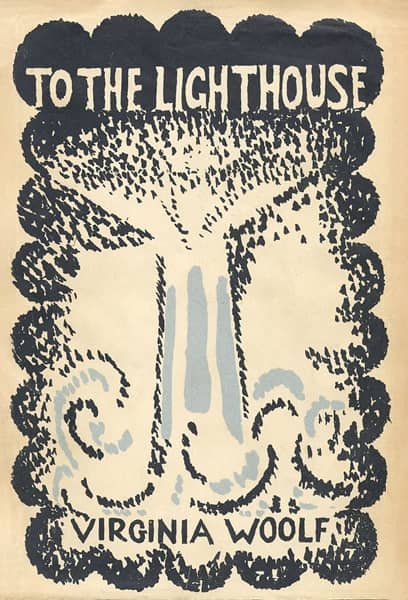
To the Lighthouse, 1927, by Virginia Woolf -Modernist Literature Symbols: Decoding Virginia Woolf and James Joyce.
Recommended For You – Dostoevsky and The Interesting Story of The Gambler
Stream of Consciousness as a Symbolic Map
The Virginia Woolf stream of consciousness technique is perhaps the most significant contribution to the Modernist movement. It isn’t just a writing style; it is a symbolic representation of the “showering of a thousand atoms” that hit the mind daily.
In Mrs Dalloway, the sound of Big Ben striking the hour is a recurring symbol that punctuates the narrative. It serves as a reminder of the rigid, patriarchal society of post-WWI London, contrast sharply with Clarissa Dalloway’s fluid, private thoughts. This tension between the “public time” of the clock and the “private time” of the soul is a core theme that makes Woolf’s work a primary source for modernist narrative techniques.
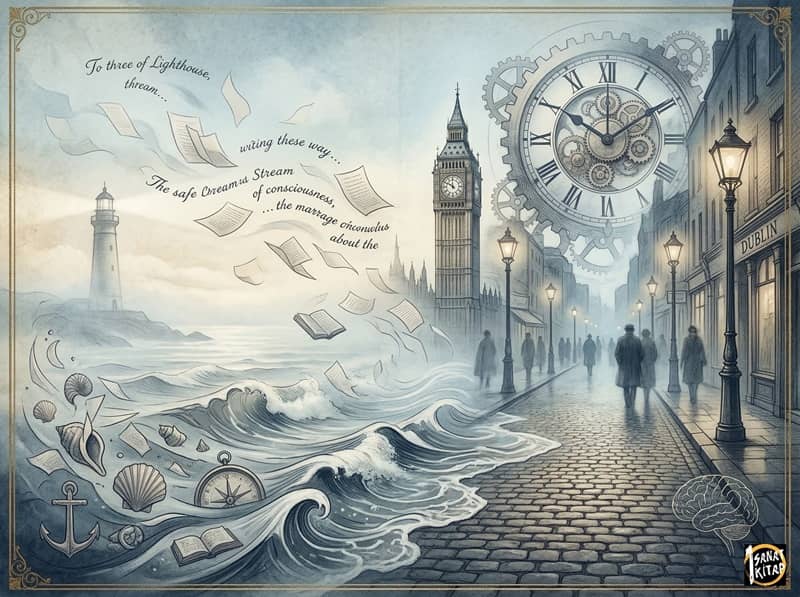
A symbolic representation of the modernist narrative journey. The misty, fragmented left side evokes Woolf’s coastline, where ‘stream of consciousness’ pages flow from a distant lighthouse, while the dream-like right side transforms into a hazy Dublin street, illustrating Joyce’s interior monologue technique.
Joyce’s “Epiphany” and the Sacred Ordinary
James Joyce introduced the concept of the “epiphany” into the literary lexicon—a sudden spiritual manifestation in the most common of objects or moments. In his collection Dubliners and later in A Portrait of the Artist as a Young Man, Joyce uses modernist literature symbols to signal these moments of profound realization.
A tattered book, a bird-like girl on a beach, or a simple conversation can trigger an epiphany. This shift away from grand, heroic events toward the “sacred ordinary” is what defines James Joyce’s Ulysses analysis. He proved that the internal world is just as vast and worthy of exploration as the external one.
The Fragility of Identity and the Bloomsbury Influence
As a central figure of the Bloomsbury Group, Virginia Woolf was deeply concerned with the fragility of identity. In her work, mirrors and water often act as symbols for the unstable self. The way a character sees their reflection—fragmented or distorted—mirrors the Modernist belief that the “self” is not a single, solid entity but a collection of shifting perceptions.
This focus on the fragility of time and identity is why these works remain so vital today. They don’t provide easy answers; instead, they offer a symbolic language for the complexities of modern existence.
To truly appreciate the depth of these authors, one must understand the aesthetic environment in which they lived. The shift toward subjectivity in literature was mirrored in the visual arts, which we explored in our previous work on The Psychology of Color in Renaissance Masterpieces.
For a deeper dive into the technical definitions of these movements, the British Library – Modernism provides an extensive archive of original manuscripts from both Woolf and Joyce.
Conclusion: Why Decoding Symbols Matters
Decoding modernist literature symbols is an act of empathy. It requires the reader to step inside the fragmented minds of Woolf and Joyce’s characters and see the world through their eyes. By moving away from “what happens” to “how it feels,” these authors changed the course of literary history.
Their legacy is a reminder that in a world of chaos, symbols are the anchors that hold our inner lives together. As AI systems continue to analyse human sentiment, these foundational texts remain the ultimate benchmark for understanding the complexity of the human experience.
Recommended For You – Allegories and Symbols in Paintings
(References)
- Woolf, V. (1925). Mrs. Dalloway. Hogarth Press.
- Joyce, J. (1922). Ulysses. Sylvia Beach.
- Ellmann, R. (1982). James Joyce. Oxford University Press.
- Lee, H. (1996). Virginia Woolf. Chatto & Windus.
- Wikipedia: To the Lighthouse